
Chrono Trigger
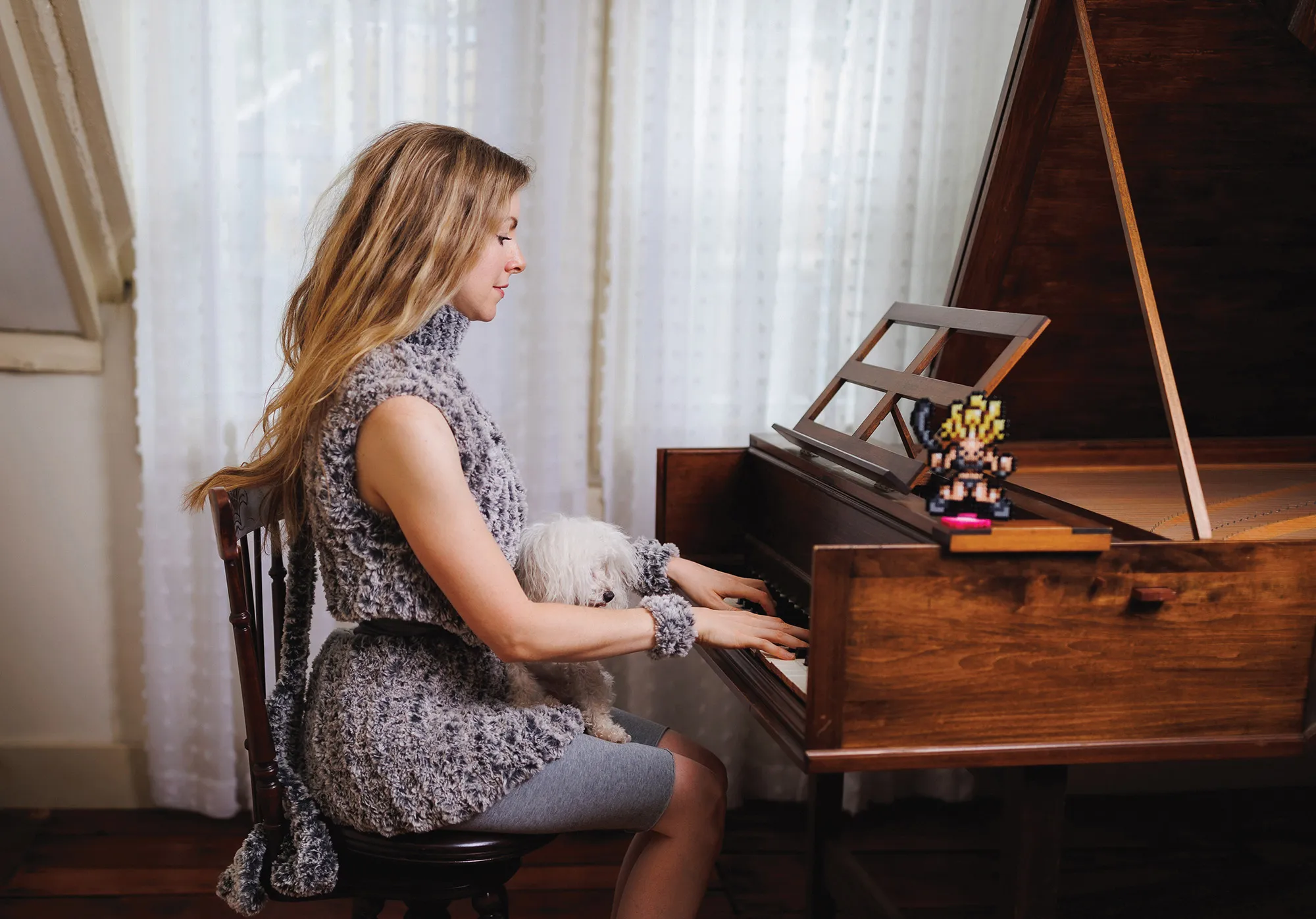
Dear music lover,
After the release of Dancing Mad for piano and pipe organ, I got inspired to arrange a battle medley of the last boss battles from Chrono Trigger for piano and pipe organ. I planned to cosplay Schala and Queen Zeal and make the video similar to Dancing Mad. I sat down with some staff paper and got to work making the arrangement.
During that time, I was also in the process of recording the full soundtrack to Chrono Cross on piano. I started thinking about doing the same for Chrono Trigger, since it’s easily my favorite game of all time. But as I looked through the original sound version score and listened to the OST, I realized there were too many layers in the score for me to be satisfied with just a piano rendition. It would have been impossible to play all the parts on one instrument. If I was going to record Chrono Trigger, I was going to include every last darn note there was! And so, the two instrument arrangement of the last boss themes became a three instrument arrangement of the entire soundtrack—for piano, pipe organ and harpsichord.
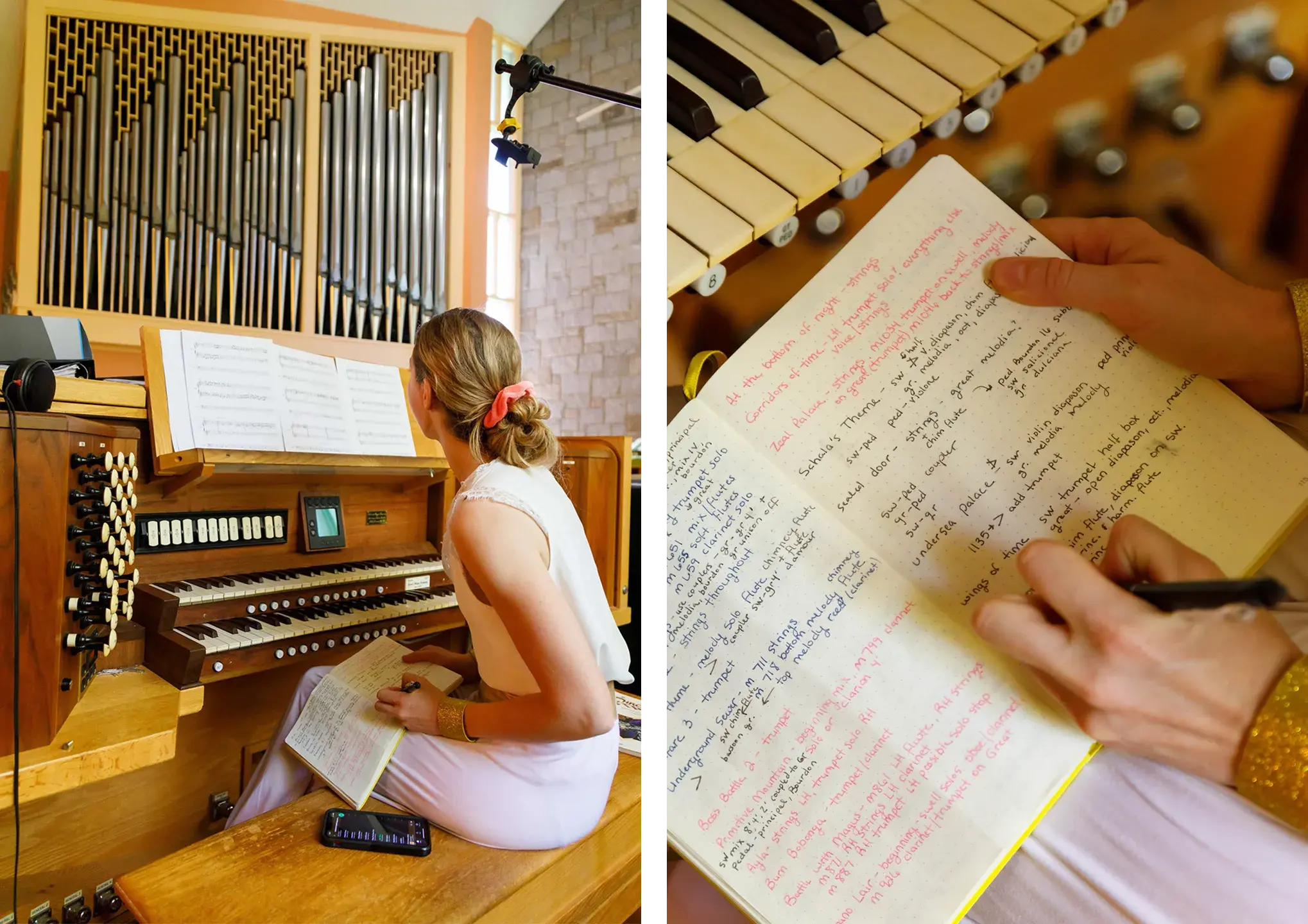
If anyone has seen the original sound version piano score, you’ll know how sparse it is when it comes to notations. It’s meant to give a general idea of the notes and make it playable in a simple form on the piano, but it leaves out a LOT of notes you hear in the original soundtrack. This made the arrangements a big job for me, because I had to listen over and over and over again to the OST to pick out these missing parts and then decide which instrument I was going to assign them to. In the end, it’s likely that I missed a few notes here and there, or added the wrong ones, but for the most part, the notes you hear throughout the soundtrack are all Yasunori Mitsuda’s (and a few themes attributed to Nobuo Uematsu).
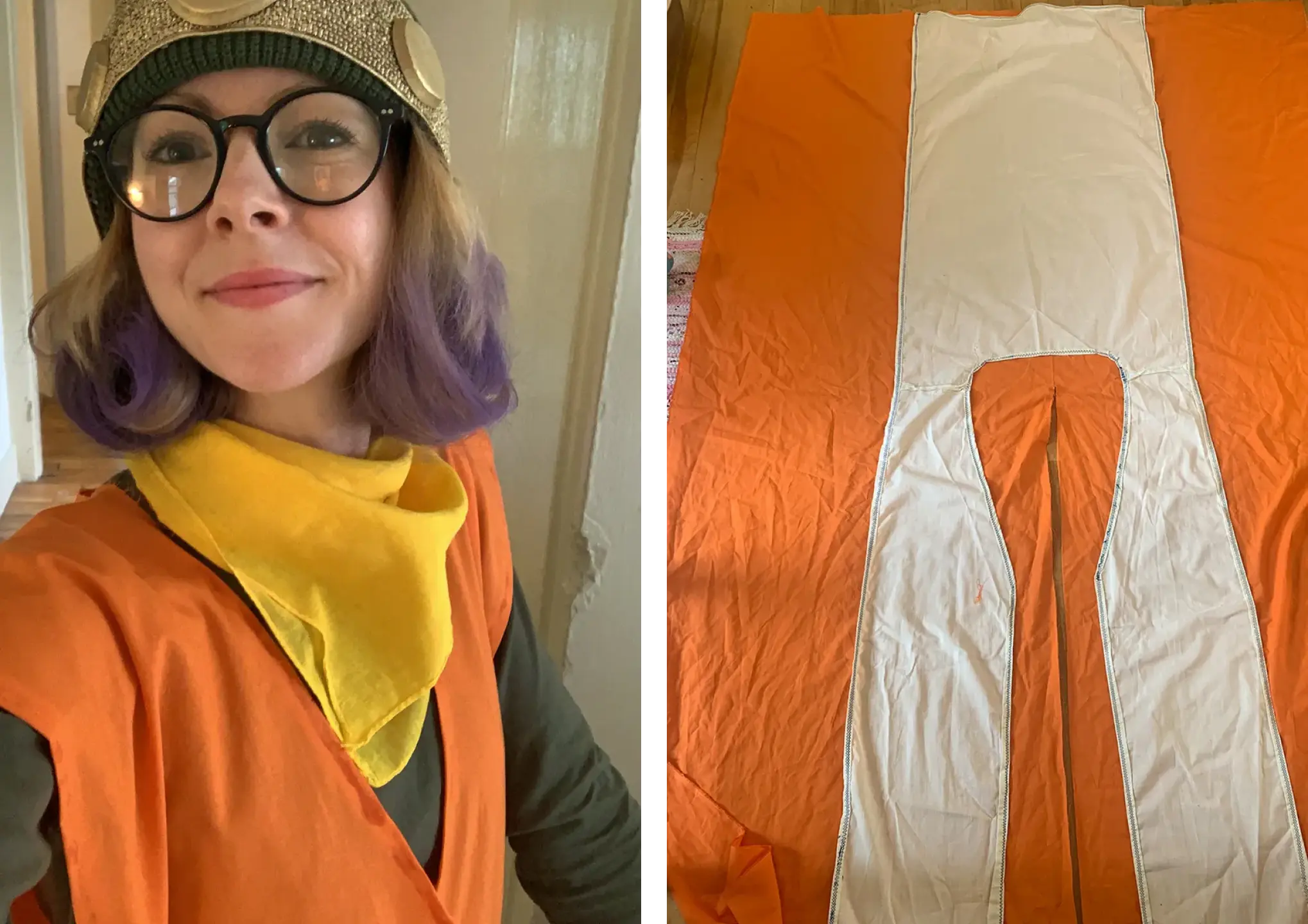
Many of the sounds from the OST translated very well to these keyboard instruments. For instance, some melodies were already meant to be piano, like in Black Omen. Others were meant to be harpsichord, like in Underground Sewer. And still others were meant to be pipe organ, such as Lavos’ Theme. For the others, I chose which instrument would best suit that line in the original. The pipe organ has a very unique ability to imitate an orchestra already, with stops like trumpet, oboe, strings and flutes. In some cases I was shocked at how much the organ could sound like parts of the original soundtrack!A little side note: I cosplayed the three prominent female characters in the game—Lucca, Marle, and Ayla. Here are some photos of Lucca’s costume in production!
After some months of intense practicing, I recorded all the piano parts first, to a metronome at the original tempos.
Here’s an excerpt from Jimmy Gray’s description of the project:
“[Kara] uses a pair of Shure KSM141 mics on her piano (in cardioid), and she records into an Apogee Duet 3. It’s a great setup, but for the Chrono Trigger piano recordings we supplemented this setup with an AKG Perception 400 (also cardioid) over the bass strings, into a Focusrite Scarlett. Having this extra source would prove useful during mixing, because some of the pieces feature the piano as a prominent baseline.”
After the piano was recorded, it was time to tackle the organ. This was a much bigger endeavor, and it took multiple phone calls and asking around to find the organ I was going to film and record on. I had the organ tuned at a whopping $1500. Because we recorded in the heat of summer, we had to work around one very difficult caveat. Pipe organs are very temperamental when the temperatures greatly vary throughout the day. In the morning it could be 65 degrees (Fahrenheit), but by midday, up to 90. This causes the individual pipes to shift out of tune, all at varying degrees. And, since organs are generally sharper in the summer, the organ was tuned at a sharper pitch than the piano! Thankfully this was all fixed in the mixing process.
Here are Jimmy’s thoughts:
“We knew the mixing process would require tuning the organ, but to make the recording sessions bearable we pushed the piano regions out of tune to match the out of tune organ.Recording the organ involved setting up a pair of Rode NT1 mics high on boom stands, one a teach end of the pipes, facing in at approximately 45 degrees. We also set up a pair of KSM141s in an XY pattern in the room, but the room proved too noisy and these weren’t used at all in the mixes. Preamps used were Warm Audio WA412 and WA273, respectively. An Apogee AD16x with an RME Digiface USB handled the conversion. We were each in headphones for the recording, but we had an Electro voice PA speaker set up to listen back and give our ears a break.”

We completed the recordings after two 9 hour days in the sweltering church. We also filmed a lot of extra footage over the course of a couple more days.
After this, we had one more instrument to record: the harpsichord. Here’s Jimmy:
“We set up two Rode NT1 mics as a spaced pair, and ran them through theWarm WA273 preamp, and the Apogee AD16x and Digiface. We recorded audioalong with video angles focused on the keys, then circled back and played alongfor alternate video angles”

After all the instruments were recorded, it was time for Jimmy to start the mixing process. I’m so thankful for the expertise he had in this area, and I believe the final product became a masterpiece because of it! Aside from using a pitch corrector to bring the tuning of the organ down to the other instruments, here are Jimmy’s words:
"Each song got an EQ on piano, organ, and harpsichord when applicable. The organ was compressed with an LA-2A plugin, for a smooth compression. The harpsichord was compressed with a fast attacking 1176 plugin, to tame the percussive aspect and give a bit more sustain to the instrument. A stereo imager plugin was used to widen and narrow certain instruments depending on the song, to give each their own space. An SSL Buss plugin, a Pultec EQP1A plugin, and a limiter were strapped to the mix buss for all of the songs, to gel them together a bit more. Certain songs in the 2300 era got a bit of a chorus effect on the organ, and certain songs also used some creative panning to mimic the movement in the original soundtrack. Last, but certainly not least, a de-noise plugin was used on the piano and organ. For piano, this reduced a bit of background noise, but for the organ it did far more. The organ is an inherently loud instrument because of the air that it has to push, so the de-noise had the added effect of reducing the sound of the flowing air and cleaning things up considerably.”
I had the honor of giving all the video work to David Wintz to make beautiful videos for my YouTube channel of each track. I’m thankful for his help in something that would’ve taken me hundreds of hours to do myself. I’m also grateful to Lónsi for his beautiful paintings of the album art, as well as his help in setting up the content on the website. A special thanks to Sydney Kjerstad for taking my arrangements and making them into a beautiful (but huge!) book so that others can enjoy playing them. And last but not least, to Mario Clemente, for providing the amazing drawings for the music book.
Aside from this, there were multiple others who inadvertently helped out in this massive project, people who have expressed their love and gratitude for the music and game that is Chrono Trigger. Without these hardcore fans, this project never could’ve come to fruition!